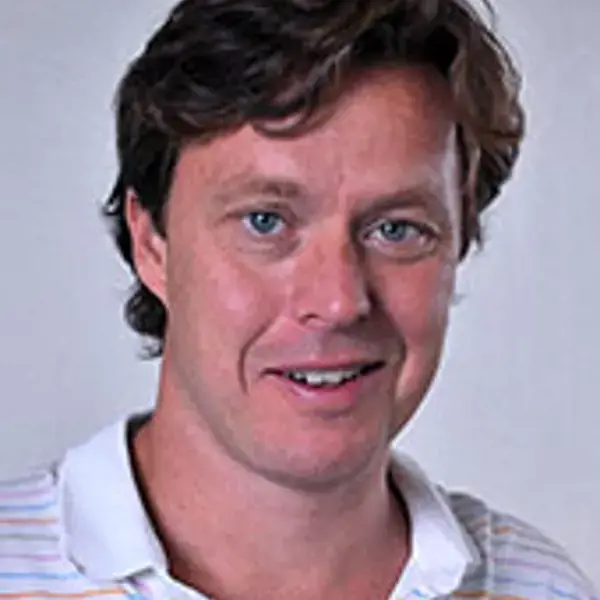
I am a professor at Chalmers University of Technology leading the Computer Vision Group.
My research focuses on geometric deep learning and 3D scene understanding, with core problems in 3D reconstruction, correspondences and visual localization with an emphasis on symmetry, equivariance and scalable learning.
Current interests include generative models and applications in medical image analysis.
Highlights:
David Marr Prize (ICCV)
Professor and Head of Computer Vision Group, Chalmers
Geometric deep learning, 3D scene understanding and visual localization
Co-founder of Eigenvision, Taigatech and Cognimatics
Previously, I was a professor at Lund University (2006–2018) and a postdoctoral fellow at UC San Diego and the Australian National University. I received my PhD in mathematics from Lund University (1997–2001).
What would be Hilbert’s problems of AI? We propose an initiative to identify the fundamental scientific questions that could help structure AI, much like Hilbert’s 23 problems shaped modern mathematics. The white paper is open for public comments and aims to lay the foundation for a long term research program in AI. Read it on OpenReview.
RoMa v2, new state-of-the-art in dense image matching and currently the world’s best dense matcher.
Read the paper. We also won the Best Industry Paper at the Swedish Symposium on Image Analysis, Örebro, 2026 for our work on dense matching.
MuM: Multi-view masked image modeling for 3D vision. A simple self-supervised approach for learning geometric features. Accepted to CVPR 2026. Paper.
Reweighting can dramatically simplify geometric vision problems: for two-view triangulation, degree six drops to degree two. Presented at 3DV 2026. Paper. Joint work with Felix Rydell, Kathlén Kohn, Dept of Mathematics, KTH.
Semi-Supervised Hierarchical Open-Set Classification: hierarchical recognition in the presence of unknown classes. Presented at WACV 2026. Paper.
I gave two keynote talks in October 2025: The ICCV Workshop CALIPOSE in Honolulu and the French-Swedish AI Workshop at KTH.
At large scale, insisting that networks rediscover known symmetries isn’t just inefficient — it’s a curious form of self-imposed ignorance! Read our ICML 2025 spotlight paper on Flopping for Flops.
R3D2 blends 3D assets seamlessly into neural driving scenes using diffusion, unlocking scalable and realistic AD simulation. Explore the project or read the paper. Collaboration with Zenseact, UC Berkeley and Linköping University.
I am co-founder and board member of the computer vision consultancy Eigenvision AB. Turnover (2025): 14 MSEK.
I am co-founder and board member of the AI start-up Taigatech AB. Turnover (2025): 23 MSEK.
Co-founder of Cognimatics AB (2003), acquired by Axis Communications in 2016.
Patent inventor and senior advisor to Polar Rose AB, acquired by Apple in 2010.
Patent inventor with Zenseact on 3D object detection, 2019.
Research collaborator to Mapillary AB, the crowd-sourced street-view platform founded by my former PhD students Jan-Erik Solem and Yubin Kuang, acquired by Meta in 2020.
Interested in the visual localization problem? We are running a benchmark site: Visual Localization. Try it out with your algorithm!
Interested in my mathematical ancestors and descendants? You can find them here at the Mathematics Genealogy Project.
My Erdös number is 4 via the path: Fredrik Kahl - Gunnar Sparr - Jaak Peetre - Svante Janson - Paul Erdös.
ERC-project GlobalVision, 2008-2013. Starting Independent Research Grant, funded by the European Research Council.
Learn more about 3D reconstruction form large-scale image sets and visit Örebro castle at the same time. For more info, read the paper. More reconstructions by Carl Olsson.
Long-Term Visual Localization Revisited C Toft, W Maddern, A Torii, L Hammarstrand,
E Stenborg, M Okutomi, M Pollefeys, J Sivic, T Pajdla, F Kahl, T Sattler IEEE Transactions on Pattern Analysis and Machine Intelligence, 2021
We won the Best Industry Paper at the Swedish Symposium on Image Analysis, Örebro, 2026 for our work on dense matching by Johan Edstedt, David Nordström et al.
Several of my PhD students have received the bi-annual Best Nordic Thesis Award
which I consider to be my top achievement!
Jennifer Alvén, Best Swedish Thesis Award 2019-2020: Combining Shape and Learning for Medical Image Analysis. Footnote: Nordic version canceled due to Covid-19 pandemic.
Petter Strandmark, Best Nordic Thesis Award 2013-2014: Discrete Optimization in Early Vision.
Carl Olsson, Best Nordic Thesis Award 2009-2010: Global Optimization in Computer Vision: Convexity, Cuts and Approximation Algorithms.
Jan-Erik Solem, Best Nordic Thesis Award 2005-2006: Variational Problems and Level Set Methods in Computer Vision - Theory and Applications.
Fredrik Kahl, Best Nordic Thesis Award 2001-2002: Geometry and Critical Configurations of Multiple Views.
We won the Best Industry Paper at the Swedish Symposium on Image Analysis, Luleå, 2024 for our work on Steerers by Georg Bökman et al.
We won the Best Paper Award at ICPRAI 2024 in Jeju Island, Korea! Read the paper.
We won the Best Industry Paper at the Swedish Symposium on Image Analysis, Göteborg, 2019 for our work on 3D Object Detection by Eskil Jörgensen, Christopher Zach and Fredrik Kahl.
We get state-of-the-art results on monocular 3D object detection on Kitti! Read the paper. More videos here.
We won the Best Industry Paper at the Swedish Symposium on Image Analysis, Stockholm, 2018 for our work on Visual Localization by Carl Toft et al.
The Best Student Paper Award is awarded to "Shape-Aware Multi-Atlas Segmentation" at ICPR 2016, Cancun, Mexico! Read the
paper.
I received the Marr Prize in 2005, which is considered to be one of the most prestigious prizes in computer vision.
Miscellaneous
I worked in the Management Group of CHAIR - Chalmers AI Research Centre, CHAIR, 2019-2021.
I was on Program Management Group of WASP-AI, 2018-2020.
Organiser of the first Swedish Symposium on Deep Learning (SSDL), June 20-21, 2017. Location: KTH, Stockholm.
I was the main PI for the SSF project Semantic Mapping and Visual Navigation for Smart Robots a collaboration between computer vision, automatic control, machine learning and mathematics. Budget: 31.1 MSEK during 2016-2022. Funded by Swedish Foundation for Strategic Research.
Summer School in Convex and Discrete Optimization on the island of Als, Denmark. Tutors: Fredrik Kahl and Richard Hartley, August 2015.
Tutorial in Zurich at ECCV'14 on Robust Optimization Techniques in Computer Vision successfully completed with more than 150 registered participants. Tutors: Olof Enqvist, Fredrik Kahl and Richard Hartley.
I was on the Editorial Board of Journal of Mathematical Imaging and Vision, 2014-2018.
Optimization in Computer Vision. A one week PhD School, 19-23 May 2008 in Copenhagen, Denmark. Co-organized with Henrik Aanaes, DTU. Lectures include Prof. Richard Hartley, Phil Torr and Lieven Vanderberge.